

For a flight across the country, the offer looks excellent. However, we reached the payment stage with a different amount already. Let's break down the final receipt:
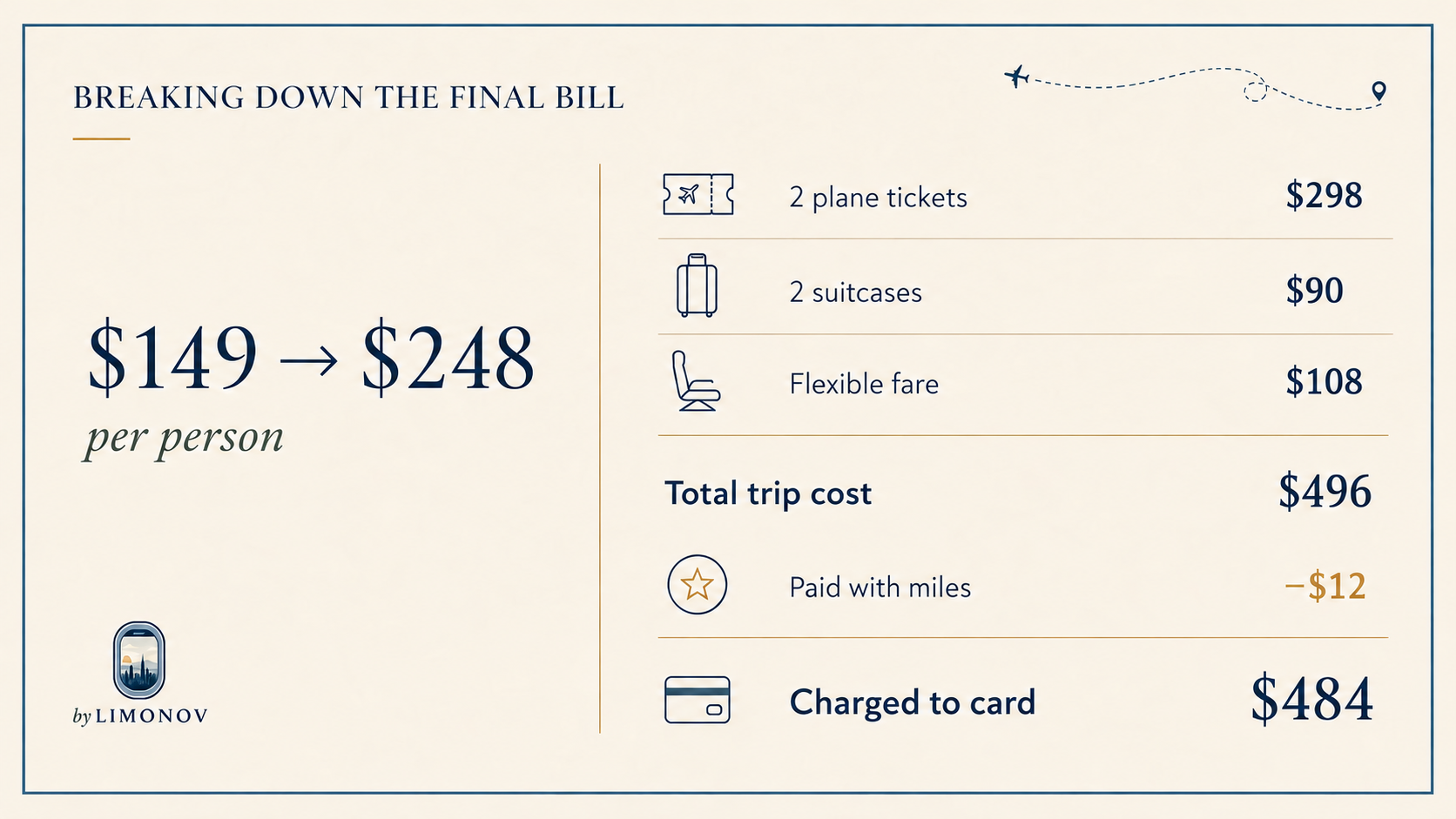 A visual representation of the final price with all services
It turns out that a $149 ticket with the options we needed ended up costing $248 per person. That is 66% more expensive than the original price.
At first, one might want to call these hidden fees. But formally, JetBlue didn't hide anything. You really could fly for $149 - the price included the flight itself and a personal item.
It's just that the airline was showing the price for not exactly the trip we needed. We are flying across the country with luggage and want to sit together. Moreover, plans might still change, so the ability to refund the ticket also matters. That is exactly where the most interesting part begins.
Today, airlines don't just sell seats on planes. It's more like a flight construction kit.
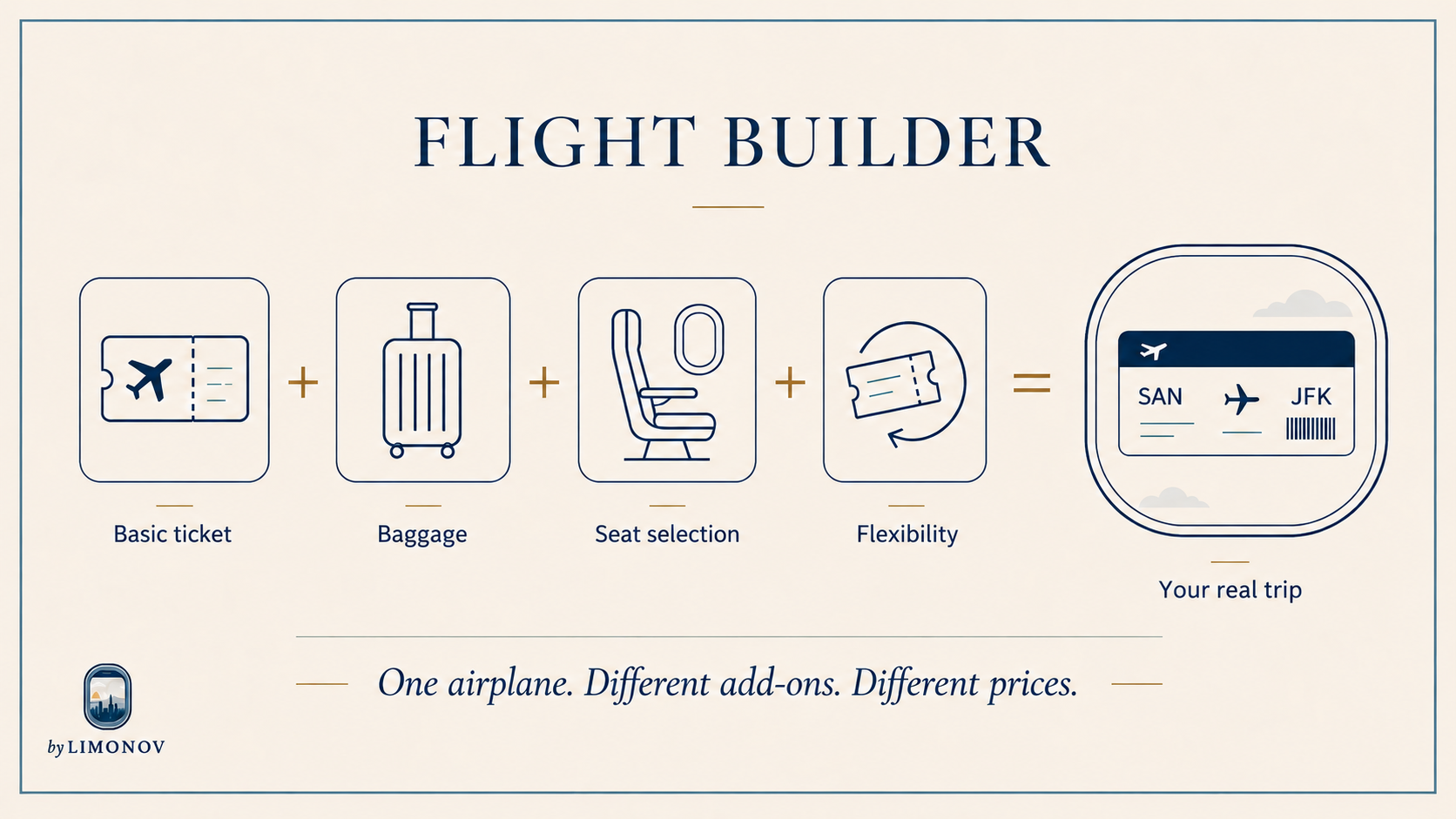 What a plane ticket is most often assembled from
One passenger just needs to get from San Diego to New York with a backpack. Another needs to choose a window seat over the wing and pay extra for 2 suitcases of things after active shopping. They both sit on the same plane, maybe even in the same row, yet they paid completely different prices for their tickets.
Airlines benefit from this for two reasons at once:
-
A low starting price looks better in search. When you search for a ticket on Aviasales (not an ad, though I wish it were), your eyes are more likely to fall on the $149 price rather than $248. By the time extra costs appear, the passenger has already chosen a convenient time, studied the route, and is mentally already in New York, which increases the chances they won't choose another carrier.
-
The airline doesn't include services in the cost for those who don't actually need them. If flying alone with just a personal item, you wouldn't want to pay for luggage as well.
The problem lies not in the extra payments themselves, but in the comparison. We think we are comparing the cost of flights, while in reality, we sometimes have completely different versions of what seems to be the same product in front of us.
Here is a very clear example - you want to fly from Moscow to Istanbul. You have two tickets to choose from:
- Pegasus Airlines, departure at 00:20 from Vnukovo, price $250
- Turkish Airlines, departure at 00:40 from Vnukovo, price $450
It would seem to be the same route, departure time, even the airport, yet Turkish is almost 2 times more expensive. However, it's not that simple. The first one includes a seat and a backpack, while the second one includes a much more comfortable seat, a backpack+carry-on+checked bag, food, and an entertainment system with a screen in the seat. That is, what seems like an obvious choice in favor of the cheaper option on the surface turns out to be entirely different levels.
And if you try to level the conditions and add luggage, food, and the ability to watch movies to Pegasus - the cost becomes almost identical.
Returning to our tickets - I don't think we chose a bad ticket or fell for airline tricks. The flight is direct and allowed us not to waste the whole day traveling. I didn't find another option that would turn out to be significantly more profitable, faster, or more convenient after all the additions.
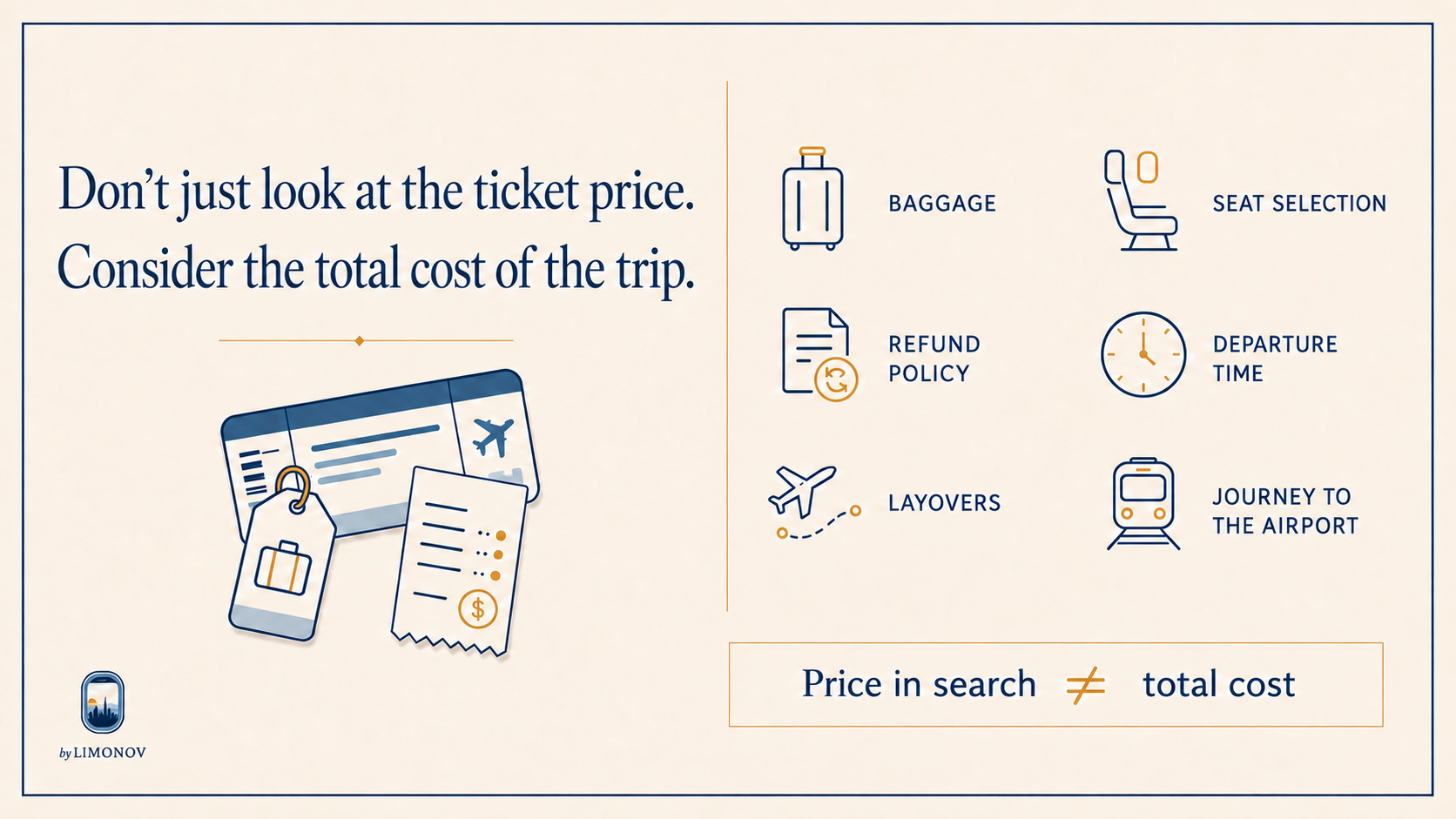
Therefore, compare not the prices on search aggregators, but fully assembled trips - with luggage, the required fare, etc. Sometimes it can happen that the cheapest ticket on paper turns out to be the most expensive and inconvenient.
By the way, this post opens the first of the new regular columns on the channel - "Why it works"
In it, I will analyze interesting systems, solutions, and business models: how they are structured, what problem they solve, and why people use them.
There will be 4 regular columns in total. You will learn about them later as they are released. I will try to release each column 1-2 times a month to keep this channel more or less active. There will also be 5 periodic columns that will come out once every couple of months. Each year will conclude with byLIMONOV Review - a large series of reviews and nominations of companies for the entire past year - from products and services to carriers and airlines. Everything will be based solely on personal experience.
Columns don't mean that every post will be written according to a template. I will try to keep the channel personal and open to different topics. I will still release posts about my travels and just random thoughts. Such columns are an attempt to more clearly unite various stories and analyses that I find interesting to notice and break down.