
But what hooked me the most was something else entirely - how they treat the people thanks to whom all of this works. And it is not even about unusual bonuses or corporate events. I was impressed by the management's approach itself.
Here, a manager does not just hand out instructions - he knows how the business works himself.
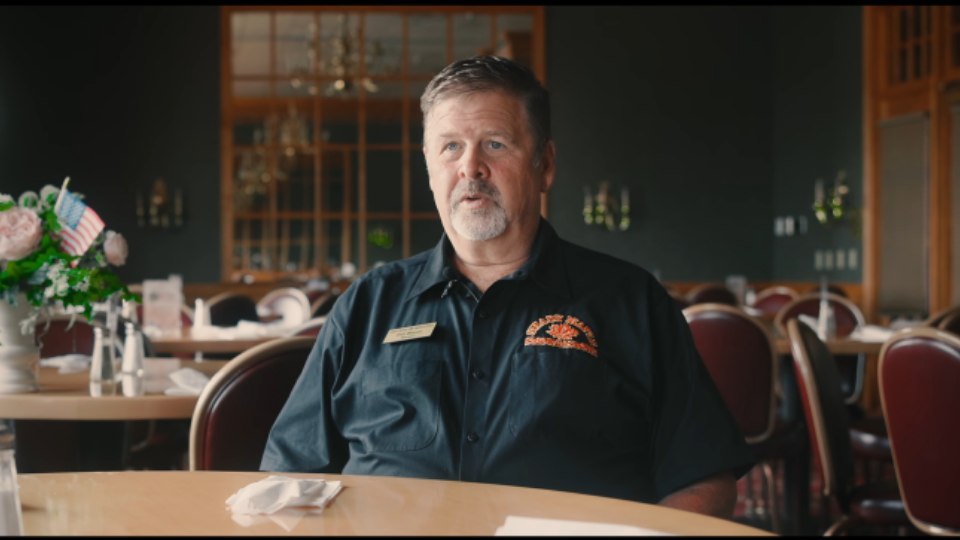 Phil Weaver - director and son of the founders
The restaurant director is a descendant of the founding family. He understands different aspects of the work and goes on shifts himself alongside the employees. In the video, he emphasizes one simple thing several times: when people see that the manager himself is working hard, it motivates them to work even more.
And we are not talking about performative displays in front of the staff. The manager truly understands what is happening at different work areas because he goes through it himself.
I was also surprised by an episode with the company's CEO. He drives a truck with his daughter to a farmers' auction himself to buy produce. It would seem, why would a manager of such scale engage in such things personally? But it is exactly these details that show the management is not detached from the daily operations of the business.
However, what stayed with me most was the conversation about the dishwashers. About 30 people work in this section of the restaurant. And the director specifically emphasizes how important their work is. After all, if the clean dishes run out, the kitchen will not be able to continue working normally, and the guests will not be able to eat. You can have the best chefs, a beautiful hall, and excellent service, but without clean plates, the entire system starts to stop.
Moreover, the director shared that during periods when there was a shortage of staff, he himself stepped in to wash dishes. I think this is a very telling example. In the restaurant business, it is easy to start dividing people into those who create value and those who perform supporting work. But in practice, everything is arranged differently.
One person's work may be completely invisible to the guest, but dozens of others cannot work without it. And a manager who understands this looks at his own business in a completely different way.
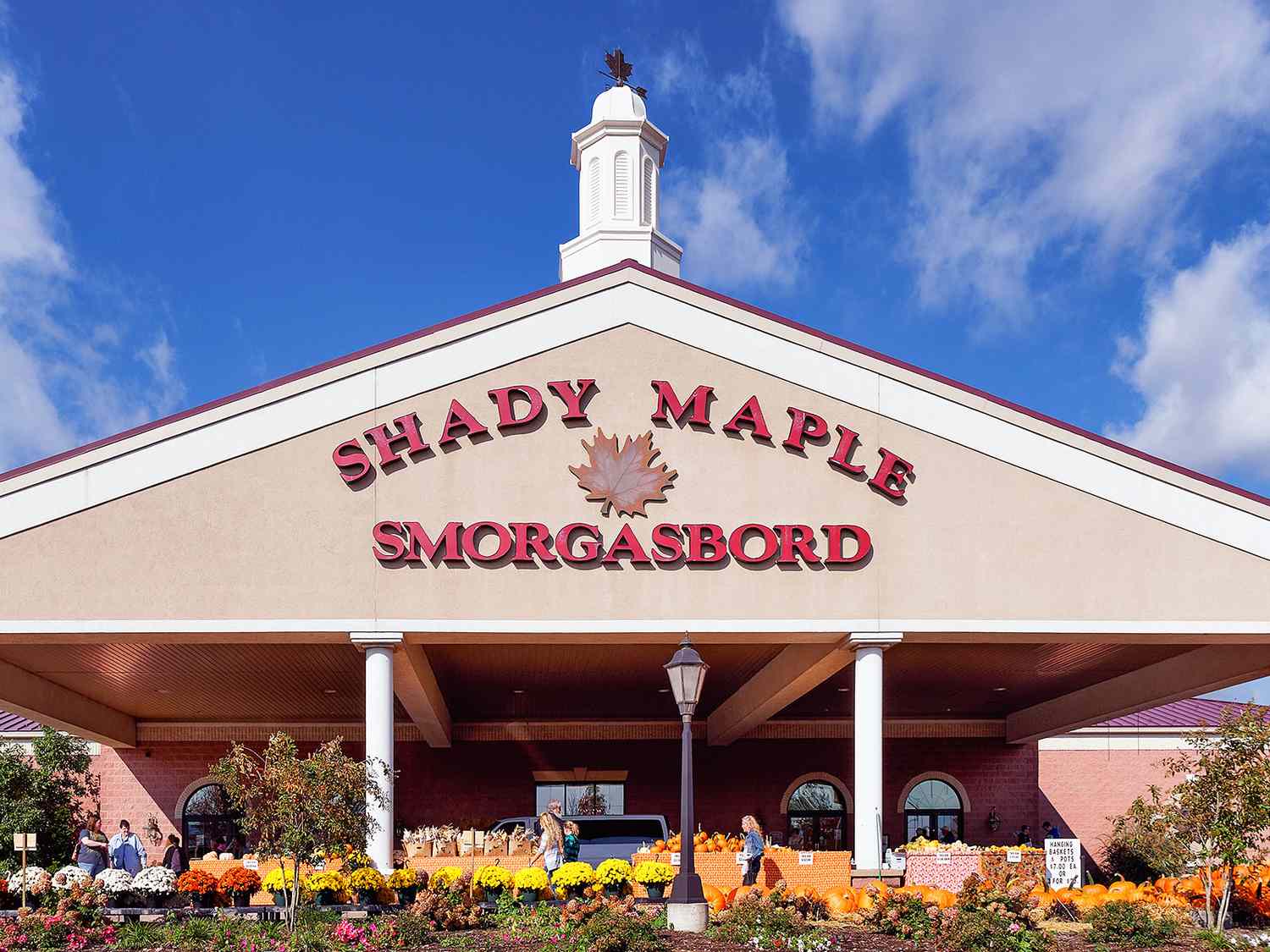 Main entrance to the buffet
I was particularly struck by the atmosphere inside the company. Judging by the stories of the employees, many of them feel like part of a big family, rather than just people who come to work, work a shift, and go home. Some employees have been working here for over 20 years. Employee turnover, judging by the company's description in the video, is relatively low. And this is interesting not only from a human point of view.
Imagine how much knowledge and experience an employee accumulates over 20 years. He knows the processes, understands the specifics of the work, knows how to solve non-standard situations, and can train newcomers. The company does not have to constantly look for replacements, retrain people, and adapt them to the team.
Of course, length of service alone does not prove that an employee is happy. But when people stay in one company for years and at the same time talk about it as a family, it is at the very least a reason to think about what the management is doing right.
There is another interesting detail. Guests say that the food here feels homemade. And I wondered: could this be related to the atmosphere within the company itself? When people have worked together for a long time, know their business, and feel like part of a team, this potentially reflects on the result of their work. Not only on the taste of the food, but also on how guests are greeted, how problems are solved, and how smoothly the entire restaurant operates.
Naturally, this is not the only explanation. The impression is influenced by recipes, the quality of products, kitchen organization, and many other factors. But the connection between the company's internal culture and the quality of service seems quite logical to me.
Why did I pay so much attention to this at all? I worked in restaurants myself, so I know that the guest sees only a small part of what is happening. He sees the waiter, the food, and the hall. But behind this stand the chefs, dishwashers, cleaners, managers, and many other people whose work the visitor may not even notice. And much more depends on how the work of the whole team is organized than it seems. You can write perfect service standards, conduct training, and set KPIs. But if an employee feels like disposable material, sooner or later it will reflect on their work.
Therefore, it seems to me that companies sometimes try to improve service from the wrong end. They think about how to make the customer happier, forgetting about the person who creates this service every day. Yet the attitude towards employees is not only a question of humanity. It is also a question of business management. When people understand their significance, see that the management does not demand from them what it is not prepared to do itself, and feel respect for their labor, the company has many more opportunities to build a strong team.
Naturally, good attitude alone is not enough. Salary, working conditions, process organization, and many other things are important. But without respect for people, everything else may also work worse. Good service does not start with a waiter's smile. It starts with why the waiter wants to smile at you at all. And, perhaps, that is the main thing I took away from the video about the huge American buffet.
Sometimes, to understand how a successful business is built, you need to look not only at what the customer receives, but also at how the company treats people behind the scenes.
If anyone is interested, you can watch the original video at the link.